You can follow a whole meeting in English. You catch the numbers, the side comments, even the jokes. Then someone turns to you and asks, “What do you think?” and every word you know disappears.
That blank moment has very little to do with your English level. Researchers call it foreign language speaking anxiety: the fear of speaking another language while people listen and, you assume, judge. Strong learners feel it too. What melts it is regular, low-pressure speaking practice, which is exactly what most learners never get. You can watch videos alone. You cannot have a conversation alone.
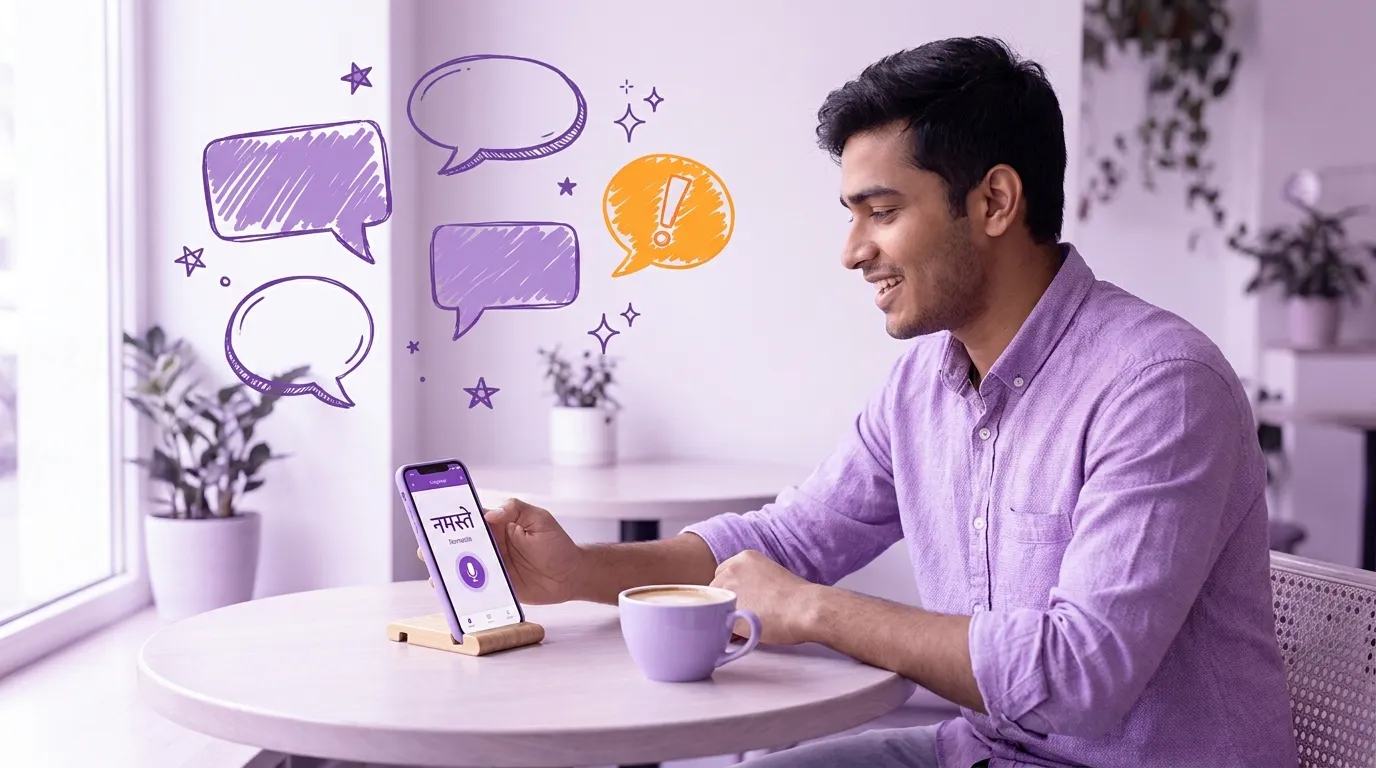
PractE is a mobile app built around that gap. It has three working parts: live group discussions, AI moderation that keeps those discussions fair, and Ava, an AI tutor you can talk to one-on-one.
What a live discussion looks like
When you set up the app, you choose your level (beginner, intermediate, or advanced) and pick topics you enjoy: movies, cricket, sports, art, politics. PractE uses both to place you in rooms with people who speak roughly the way you do, talking about things you actually have opinions on.
A discussion is a small voice room, six people at most. You can see the topic and the number of participants before you join. If a room is full, the app opens a new one on the same topic, so you are never locked out of a subject you wanted.
The small size is the point. In a classroom of thirty, your share of one speaking hour is about two minutes. In a room of six where everyone takes turns, you speak in every round. Between your turns, you listen to five other learners with different accents and different ways of putting things, all pausing and restarting just like you. Hearing other people search for words is strangely calming.
AI moderation keeps every turn fair
You have probably sat in a group call where one confident voice took over and everyone else went quiet. Knowing when to start talking and when to stop is an actual skill called turn-taking, and the signals for it, like a falling voice or a small “you know”, change from culture to culture. Unmoderated group calls get this wrong all the time.
PractE does not leave it to chance. Speaking goes in turns, and each person gets two minutes. A timer shows whose turn it is and how much time is left. When time runs out, the floor passes to the next person automatically. Nobody can hold the room for ten minutes, and nobody gets talked over because they paused to find a word.
If your turn arrives and your mind goes blank, you can skip it and just listen for a round. And if too few people are in a room to keep the conversation alive, Ava can join as a participant. There is always someone to talk with.
Warming up with Ava
For many learners, even a fair room of six feels like too much on day one. That is what Ava is for.
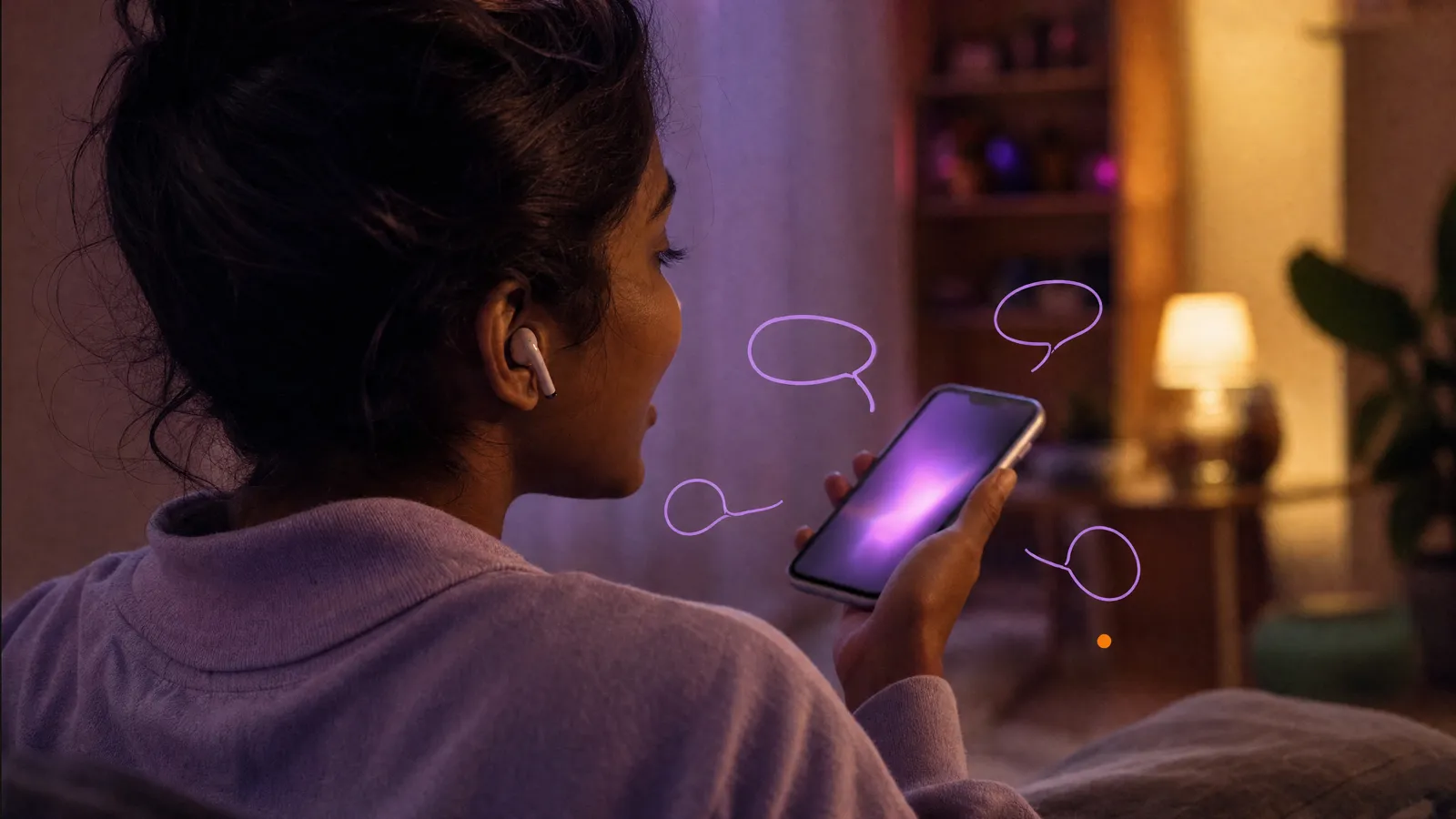
Ava is PractE’s AI tutor. Tap “Talk to Ava” and you are in a one-on-one voice conversation within seconds, at any hour. She listens, answers in a natural voice, asks follow-up questions, and nudges you to give longer answers. When you make a mistake, she offers the correct version right away, gently, while your own sentence is still fresh in your mind. She also adjusts her vocabulary and speaking pace to your level, so a beginner is not buried under idioms.
Practicing with software might sound like a downgrade until you see the research. In a 2025 study, learners at roughly B1 level practiced with an AI conversation partner for six weeks and improved their IELTS speaking scores by 0.72 bands; matched learners who practiced on their own for the same time gained 0.28. The AI group’s speaking anxiety also fell further, and in interviews they described the sessions as low pressure and judgment-free.
That last part matters more than it sounds. When you are anxious, new language does not stick, even when you understand every word of it; the linguist Stephen Krashen called this barrier the affective filter. Lower the fear, and the same thirty minutes of practice teach you more.
Ava still has limits worth naming. She is endlessly patient, but she is not an audience of real people, and real people are the ones you freeze in front of. So use her the way the app intends: warm up in private, then carry that ease into a live room.
Where the confidence comes from
Every PractE session, with Ava or with a group, runs the same quiet loop. A safe room lowers your fear, and lower fear gets you talking. Talking shows you the holes in your English (“I don’t know the word for this!”), and the replies you get start filling them.
No single session feels dramatic. You take a few turns, you lose a word in the middle of a sentence, someone responds anyway, and you leave. Run that loop most days for a month, though, and something shifts: you have now done, many times over, the one thing that videos and grammar exercises never made you do.
The next time a meeting turns toward you, the question will not land in silence. You will have answered questions out loud before, in rooms built for exactly that.